

Party wall disputes can disrupt construction plans and strain neighbor relationships. This guide is for property owners, builders, and adjoining property owners who need to understand the costs and timelines involved in resolving party wall disagreements under the Party Wall Act 1996.
When neighbors can’t agree on proposed building work affecting shared walls or boundaries, the dispute resolution process follows specific legal steps that can take several months and cost thousands of pounds. You’ll learn about the typical dispute resolution timeline that ranges from initial notice through surveyor appointments to final awards. We’ll also break down the real costs involved, including surveyor fees, potential compensation payments, and who pays what during each stage of the process.
Understanding Party Wall Disputes and Legal Framework

Types of walls covered under Party Wall Act 1996
The Party Wall Act 1996 encompasses several distinct wall types including party walls that stand astride property boundaries, party structures such as floors and partitions separating buildings or flats, and walls built along the line of junction between neighboring properties.
Legal obligations when planning construction work
Property owners must serve written notice to all affected adjoining owners before commencing any work covered by the Party Wall Act. Notice periods require at least two months for party wall works and one month for excavation or boundary works, with notices containing specific details including work descriptions, start dates, and property addresses.
Common causes that trigger party wall disputes
Party wall disputes typically arise from three main scenarios: work on existing party walls or structures such as cutting into walls or inserting beams, building new walls on or astride boundaries, and excavation within three to six metres of neighboring buildings for new foundations.
Consequences of failing to serve proper notice
Failure to serve proper Party Wall Act notice constitutes a legal breach that can result in injunctions stopping construction work, potential court proceedings, and liability for damages. Additionally, selling a house without proper party wall agreements can create complications during property transactions and potentially affect property values.
Party Wall Dispute Resolution Process and Timeline

Serving Initial Notice Requirements and Response Periods
The party wall dispute resolution timeline begins with serving the appropriate notice, with specific periods mandated under the Party Wall Act 1996. A Section 3 Party Structure Notice requires a two-month notice period before works can commence, while Section 1 Line of Junction Notice and Section 6 Adjacent Excavation Notice each carry a one-month notice period. Neighbours have a 14-day response window to consent or dissent. If written consent is provided within this timeframe, works can proceed once the notice period elapses, creating the best-case timeline of approximately eight to nine weeks for Section 3 notices. However, if neighbours fail to respond or dissent, this triggers the surveyor appointment process and extends the overall timeline significantly.
Appointing Party Wall Surveyors When Disputes Arise
When dissent occurs or neighbours fail to respond within the 14-day period, party wall disputes escalate to the surveyor appointment stage. This deemed dissent route adds approximately two to three additional weeks before a surveyor can be formally appointed on behalf of an unresponsive neighbour. The efficiency of the appointed party wall surveyor plays a crucial role in determining timeline progression. Experienced surveyors familiar with requirements and procedures can streamline the process, while delays often occur when adjoining owners appoint surveyors very late in the process or when disagreements arise between surveyors on specific Award conditions. Under favourable circumstances with cooperative parties and complete documentation, competent surveyors can potentially complete simple awards within a week.
Creating Legally Binding Party Wall Awards
Following surveyor appointments, the creation of a party wall agreement through a legally binding Party Wall Award becomes the critical next phase. In reasonably uncomplicated cases, progressing from dissent to a finalised Award typically requires four to six weeks beyond the original notice period, depending on surveyors’ assessment speed and agreement on document terms. Complex schemes involving significant excavation or multiple properties require additional time for thorough review. The Party Wall Act does not establish strict deadlines for Award completion, though both surveyors maintain legal obligations to act expediently. Complete architectural drawings and structural engineering details prove essential for expediting this process, as incomplete documentation can cause significant delays in impact assessments.
Appeals Process and Enforcement Mechanisms
The reference content does not provide specific information about formal appeals processes or enforcement mechanisms under the Party Wall Act 1996. However, disagreements between surveyors during the Award creation process represent a common source of timeline extensions in party wall dispute resolution. When surveyors cannot reach agreement on specific Award conditions, this can substantially delay project commencement beyond the standard four to six week Award preparation period.
The Third Surveyor: When Two Surveyors Reach Deadlock

Circumstances requiring third surveyor intervention
Now that we have covered the party wall dispute resolution process, the third surveyor becomes essential when the two appointed surveyors reach deadlock on specific points within an award. Under the Party Wall etc. Act 1996, a third surveyor referral is required when surveyors cannot agree on award terms, fee disputes between surveyors, scope of works disagreements, or when one surveyor refuses to engage in the process. However, a third surveyor is only needed when two separate surveyors have been appointed – not when parties use an agreed surveyor. The referral must involve a genuine dispute between surveyors, as premature or manufactured referrals expose the award to legal challenge.
Appointment process and impartial role responsibilities
The third surveyor must be jointly selected by both appointed surveyors at the time of their own appointments, not when a dispute arises – this is a statutory requirement under Section 10 of the Party Wall etc. Act 1996. While the Act does not stipulate specific qualifications, the third surveyor should have extensive experience and knowledge in party wall disputes. The selection process typically involves each surveyor proposing three suitable candidates, then agreeing on one. If surveyors cannot agree, the local authority can appoint the third surveyor. The RICS 8th edition strengthens impartiality standards, requiring formal declarations of no conflict before accepting referral, ensuring the third surveyor remains entirely independent from both parties.
Final determination powers and binding decisions
When deadlock occurs, either surveyor or owner may refer the matter to the third surveyor in writing, clearly identifying the specific point of disagreement. The third surveyor’s role is not as an arbitrator under the Arbitration Act 1996, but operates entirely under statutory powers from the Party Wall etc. Act 1996. They review submissions and make binding determinations without being required to hold hearings, though they may choose to do so. Their decision becomes part of the award and is final on that specific matter, ensuring the statutory process never grinds to a halt when surveyors cannot reach agreement.
Appeal options through County Court within 14 days
Any party dissatisfied with the third surveyor’s determination has exactly 14 days to appeal to the County Court. After this window expires, the determination becomes final and binding. This tight timeframe emphasizes the importance of the third surveyor’s role in providing swift resolution to deadlock situations. The appeal process through County Court represents the only formal challenge mechanism available, making the third surveyor’s impartial determination a critical component in preventing costly legal escalation while maintaining the integrity of the party wall dispute resolution process.
Party Wall Dispute Costs and Fee Allocation

Standard Surveyor Fees and Pricing Structures
Party wall surveyor fees vary significantly based on location, project complexity, and fee structure. In 2024, hourly rates range from £80-£200 in regional areas to £200-£400 in London. Fixed-fee structures include serving notices (£75-£200), simple Party Wall Awards (£700-£2,000), and Schedules of Condition (£300-£1,000). Complex projects requiring basement excavations or multiple adjoining owners can cost £1,500-£4,000+. Most surveyors offer either fixed fees for predictable costs or hourly billing for complex cases with variables.
| Service | Regional Cost | London Cost |
|---|---|---|
| Serving Notice | £50-£120 | £100-£200 |
| Simple Award | £700-£1,200 | £1,200-£2,000 |
| Complex Award | £1,200-£2,500 | £2,000-£4,000+ |
| Schedule of Condition | £300-£600 | £600-£1,000 |
| Hourly Rate | £80-£200 | £200-£400 |
Who Pays for Party Wall Surveyor Costs
Under the Party Wall Act 1996, the building owner undertaking the works bears responsibility for all reasonable party wall costs. This includes their own surveyor’s fees, the adjoining owner’s surveyor fees (if appointed), Party Wall Award preparation costs, and any third surveyor fees. The building owner typically pays Land Registry search fees (£8 per search) to identify legal owners and leaseholders. Exceptions exist when adjoining owners request unnecessary work or their actions unreasonably increase costs, potentially making them liable for additional expenses.
Third Surveyor Fee Allocation Based on Fault Determination
When appointed surveyors reach deadlock, a third surveyor makes binding determinations on disputed matters. Third surveyor fees typically range from £500-£1,500 depending on dispute complexity. Fee allocation follows fault-based principles – if one party’s unreasonable position caused the deadlock, they may bear the third surveyor’s costs. However, the building owner generally remains responsible for these fees as part of overall party wall costs. The third surveyor has discretion in fee allocation based on each party’s conduct during the dispute resolution process.
Additional Costs for Appeals and Legal Proceedings
Beyond standard surveyor fees, party wall disputes can incur substantial additional costs. Appeals to county courts for challenging unreasonable surveyor fees can add thousands in legal expenses. Specialist engineer reports for complex excavations cost £500-£2,000. Additional site visits beyond initial agreements charge £150-£400 per visit. When disputes escalate to formal legal proceedings, solicitor fees and court costs can dramatically increase total expenses. It’s prudent to budget 20-30% contingency above quoted surveyor fees to cover these potential additional party wall dispute costs.
Preventing Party Wall Disputes Through Proper Planning

Early communication strategies with neighbors
Maintaining honest and open dialogue with your neighbour from the very start of planning is crucial for preventing Party wall disputes. Clear communication provides both parties an opportunity to discuss and address any potential issues early, helping avoid costly conflicts later. Document everything including verbal conversations, formal notices, and any agreements made to protect both parties throughout the Party Wall Act process.
Serving correct notices with adequate timing
Under the Party Wall Act 1996, property owners must serve appropriate notices with proper timing to avoid disputes. The Act requires at least two months notice before starting any work that affects the party wall. Ensuring the notice meets all criteria and is valid helps inform your neighbour of both your rights as building owner and their own rights, including their ability to appoint their own surveyor.
Choosing experienced and collaborative surveyors
Seeking advice from qualified surveyors with party wall experience is essential for smooth proceedings. Professional surveyors can provide guidance, identify legal requirements, and highlight potential issues that may arise during works. Independent surveyors act as neutral third parties, ensuring proposed work complies with safety standards and doesn’t negatively affect neighbouring properties while facilitating collaborative resolution.
Documenting pre-existing conditions to avoid damage claims
Before starting any party wall work, arrange for a schedule of condition report to document the current state of the party wall and adjoining property. Take comprehensive photos before, during, and after work is carried out to monitor if any damages arise during the process. This documentation protects both parties and helps resolve any future damage compensation claims that may emerge after works are completed.
Managing Disputes When Damage Occurs During Construction
Building owner responsibilities for property damage
Under the Party Wall etc Act 1996, building owners are legally obligated to compensate adjoining owners for any loss or damage resulting from construction works. This responsibility extends to all damage directly caused by the works, but importantly, recent Court of Appeal rulings clarify that building owners should not be liable for pre-existing structural issues that their works merely bring to light.
Schedule of condition importance for damage assessment
A thorough Schedule of Condition serves as the critical baseline for damage assessment. Party Wall surveyors conduct detailed inspections of adjoining properties before works commence, documenting the existing condition to ensure accurate comparison post-construction. This comprehensive record becomes part of the Party Wall Award and provides essential legal protection for both parties when determining whether damage resulted from the building works.
Compensation procedures and repair obligations
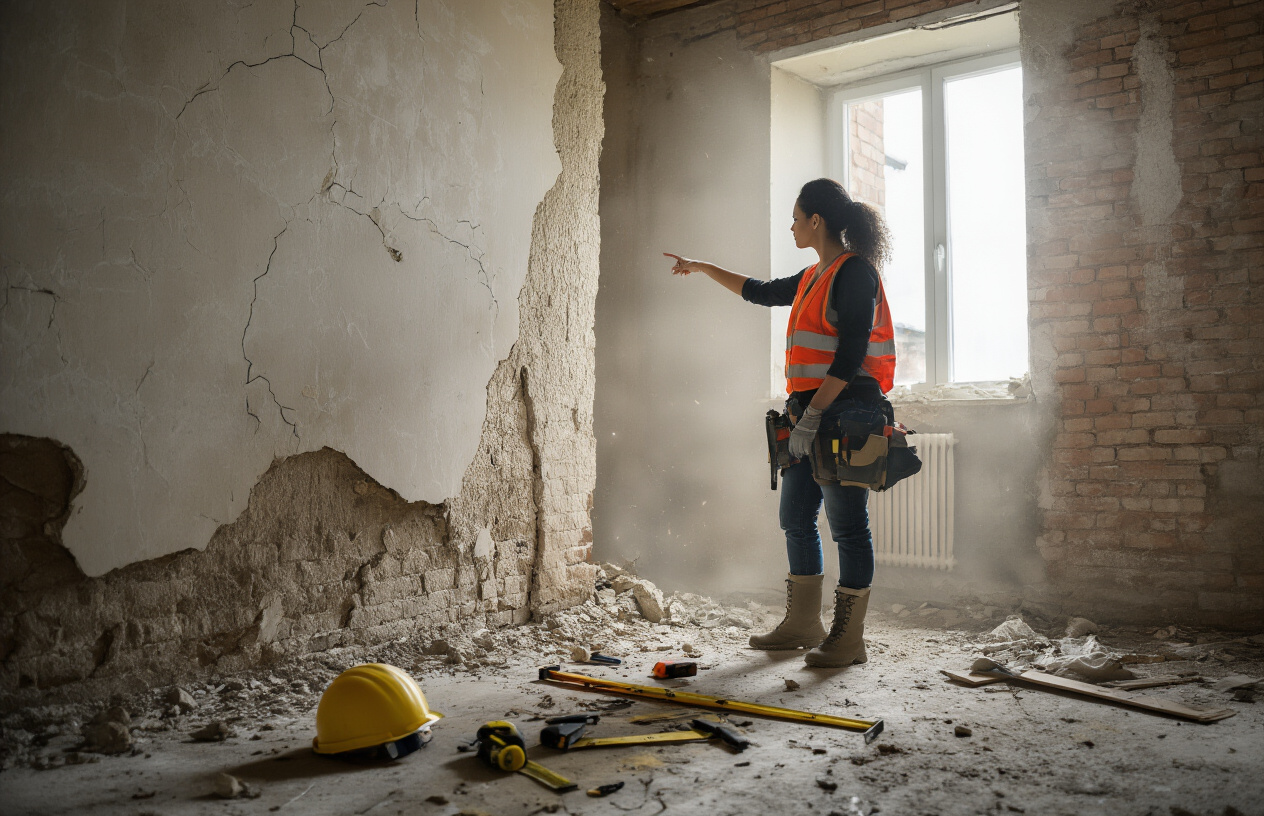
When damage occurs during construction, Party Wall surveyors conduct post-works inspections to identify changes from the original Schedule of Condition. They assess both visible damage like cracks, open board joints, and wallpaper tears, as well as non-visible issues protected under the Act. Adjoining owners have two compensation options: allowing the building owner’s contractor to make repairs or receiving monetary compensation to engage their own contractor for remedial works.
Resolving disputes about damage causation and costs
Determining damage causation requires careful analysis of whether issues stem directly from construction works or pre-existing conditions. The Court of Appeal’s guidance in Taylor v Jones establishes five key questions for compensation disputes: identifying damage caused by works, determining appropriate compensation, assessing necessary repair work, considering betterment deductions, and calculating actual repair costs. Building owners remain responsible only for damage their works actually caused, not for underlying structural problems that construction merely revealed.

Party wall disputes can be complex and costly, but understanding the legal framework, timelines, and fee structures empowers property owners to navigate these challenges effectively. From serving proper notices and appointing qualified surveyors to managing the potential escalation to a third surveyor, each step requires careful attention to statutory requirements and professional expertise. The key to successful resolution lies in early communication with neighbors, following correct procedures, and engaging experienced party wall surveyors who can work collaboratively to reach fair agreements.
Prevention remains the most cost-effective approach to party wall matters. By serving proper notices, maintaining open dialogue with adjoining owners, and documenting existing conditions thoroughly, many disputes can be avoided entirely. When disputes do arise, remember that the Party Wall Act provides a structured framework designed to protect all parties’ interests while allowing necessary building work to proceed. With typical surveyor fees ranging from £500 to £1,500 per appointment and the building owner generally responsible for all reasonable costs, proper planning and professional guidance become essential investments in your project’s success.