

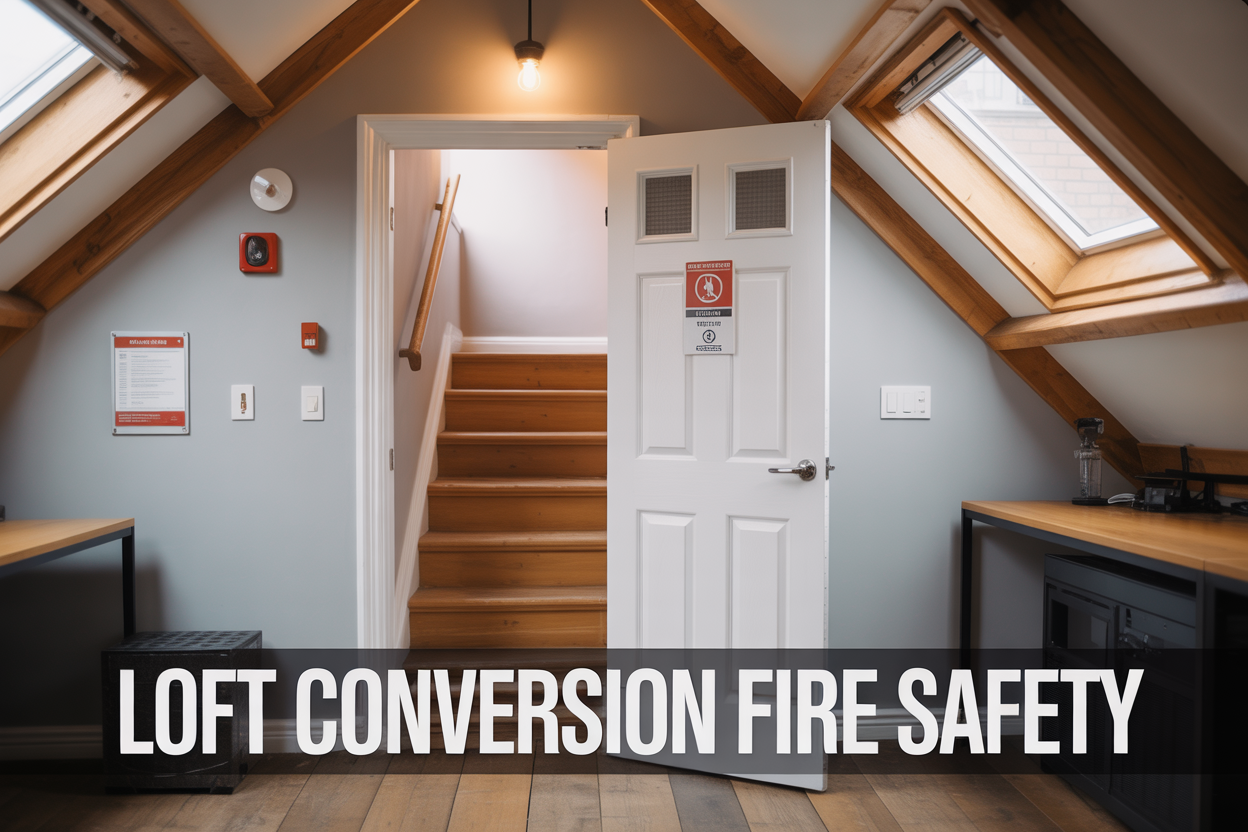
When you’re planning a loft conversion, fire safety regulations can feel overwhelming, but we’re here to break down what you actually need to know. We’ve written this guide for homeowners tackling loft conversions who want to understand the essential loft conversion fire safety requirements without getting lost in jargon or conflicting advice.
The reality is that converting your loft typically transforms your home into a three-storey building, which triggers specific fire safety rules under UK Building Regulations. We’ll walk you through the essential fire door requirements that most loft conversions need, including whether you actually need FD20 or FD30 rated doors and which rooms require them.
In this guide, we’ll cover the key fire door rating standards and your options, plus the installation requirements that building control officers look for. We’ll also explore cost-effective alternatives like fire-retardant treatments and modern design solutions that prove fire doors don’t have to look institutional. Finally, we’ll tackle the common misconceptions we see repeatedly and share expert guidance on navigating building control approval smoothly.
Our goal is to help you make informed decisions that keep your family safe while avoiding unnecessary costs and compliance headaches.
Essential Fire Door Requirements for Loft Conversions
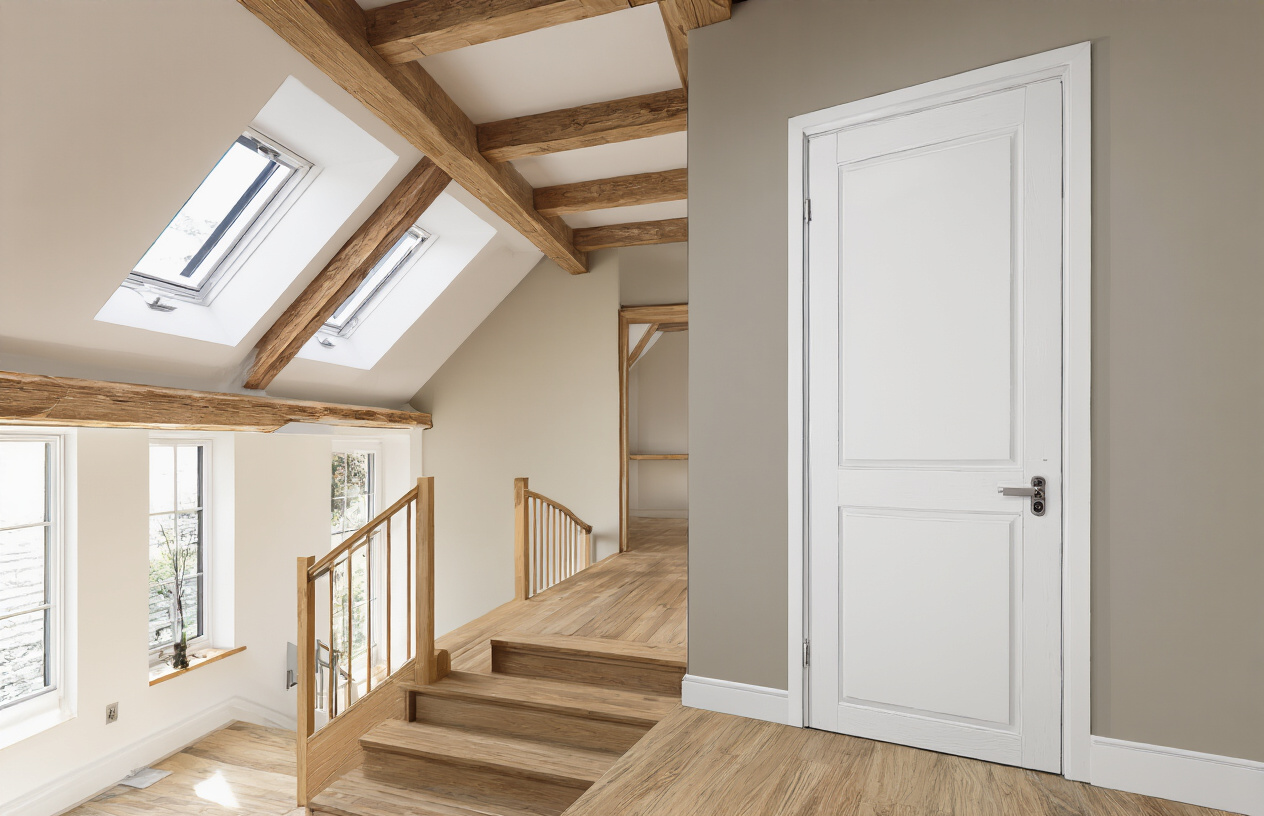
Why fire doors are mandatory under building regulations
Fire doors are mandatory for loft conversions under UK building regulations because they provide essential fire compartmentalisation, slowing the spread of flames and smoke to give occupants crucial evacuation time. We must install FD30-rated fire doors (providing 30 minutes of fire protection) in the new loft room and all rooms leading to the loft staircase to protect the primary escape route.
Creating safe escape routes from upper floors
We need to establish clearly defined escape routes since it’s too dangerous to escape via windows from floors above first floor level. Our loft conversion must include a protected stairwell that leads safely from the loft to the main exit, with fire-resistant walls ensuring smoke and flames don’t block the escape route. If our home previously used a ladder or retractable stairs, we must install a permanent staircase to provide safe access and comply with building regulations.
Protecting stairways with fire-resistant barriers
We must protect stairways with fire-resistant barriers by enclosing the staircase with fire-resistant walls using materials like fire-resistant plasterboard that can delay fire spread for at least 30 minutes. When converting a typical two-storey house into a three-storey dwelling, we need to provide new fire-resisting doors and sometimes partitions to protect the stairway throughout the full extent of the escape route, often requiring additional fire protection in existing parts of the house.
Understanding Fire Door Rating Standards and Options
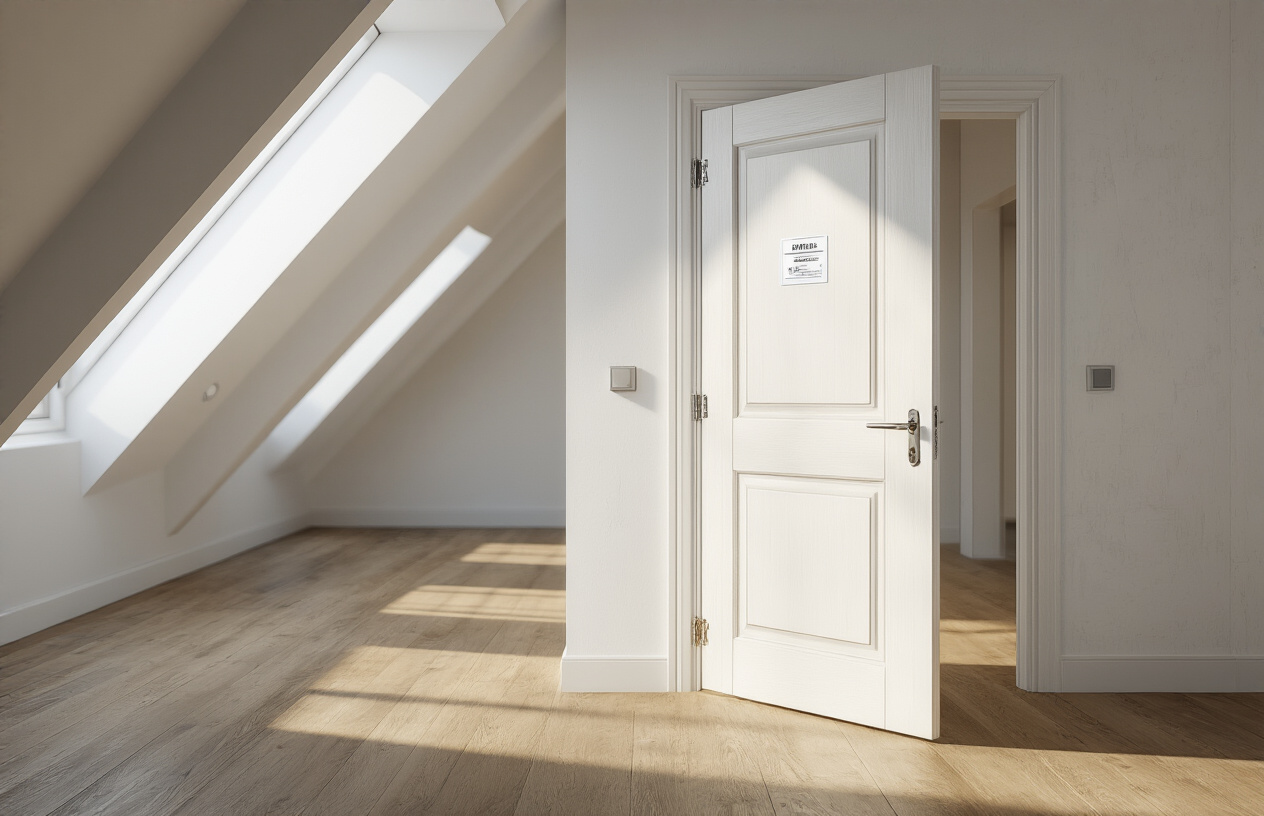
FD20 vs FD30 fire door specifications and when to use each
When planning loft conversion fire safety, we must understand that FD30 fire doors provide 30 minutes of fire resistance and are commonly required for residential loft conversions. These doors are typically installed in residential properties and low-risk commercial buildings, making them suitable for most domestic loft conversion fire door requirements at the bottom of stairs and escape routes.
Complete certified sets vs individual component installation
We recommend installing complete certified fire door sets rather than assembling individual components, as fire doors undergo rigorous testing to determine their fire resistance rating under controlled conditions. The testing standards in the UK follow British Standard BS 476 and European standard EN 1634, where any fire door hardware must match the manufacturer’s specifications from the original tested configuration. Certified doors display labels indicating their rating, certification number and relevant standards, ensuring compliance with loft conversion fire regulations UK requirements.
Alternative solutions including detection systems and sprinklers
While exploring loft conversion fire safety regulations, we can consider alternative protection methods alongside or instead of traditional fire doors. Some loft conversion projects may incorporate enhanced detection systems and automatic sprinkler installations as part of comprehensive fire safety strategies, though these alternatives must still comply with building control requirements and local fire safety regulations for residential conversions.
Fire Door Installation and Component Requirements
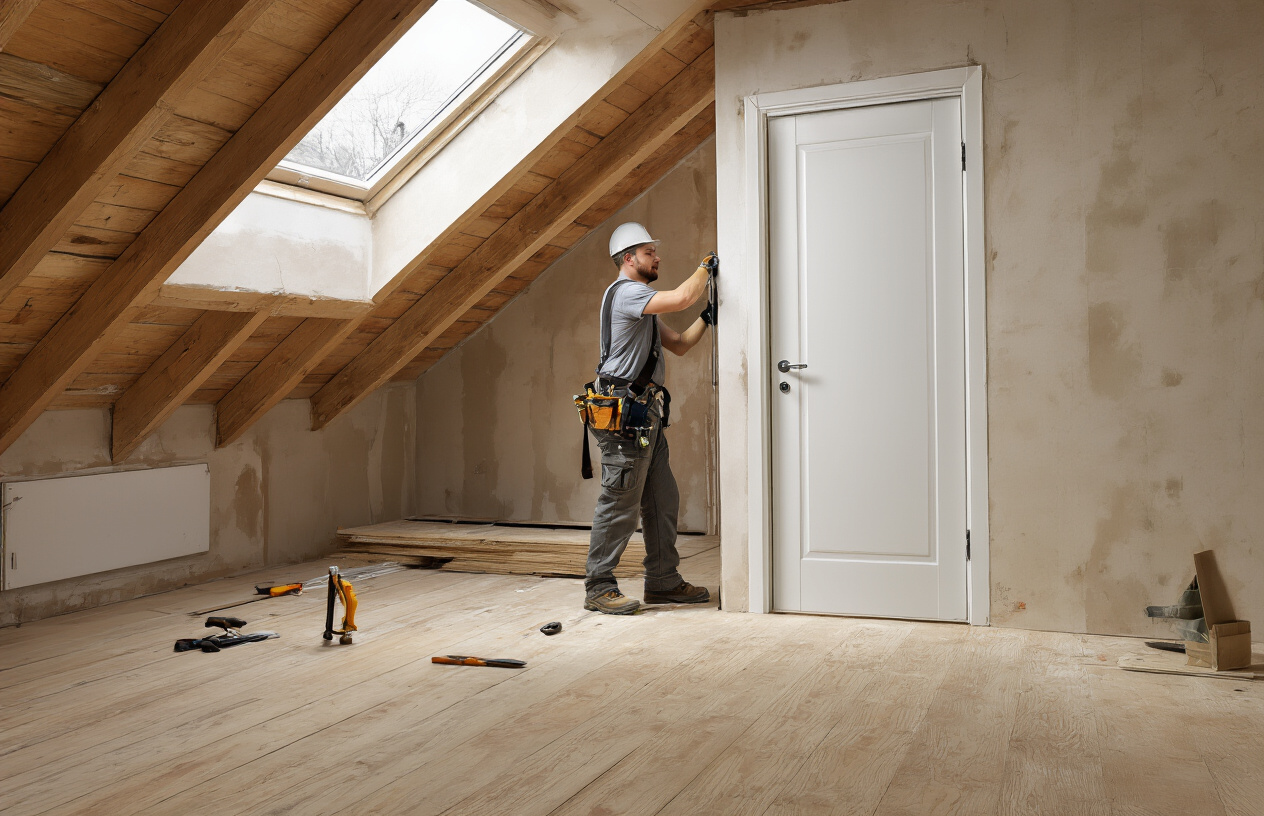
Essential components: door, lining, intumescent strips and fire-rated hinges
When installing fire doors for loft conversions, we must ensure all essential components work together as a complete fire-resistant system. The fire door itself must meet the required FD rating (typically FD30 for 30 minutes fire resistance), while the door lining provides the structural framework. Intumescent strips are critical components that expand when exposed to temperatures exceeding 200°C, effectively sealing the 2-4mm gap between the door and frame to prevent fire and smoke spread. We need a minimum of three fire-rated hinges in good working order to support the door’s weight and maintain proper closure throughout the fire rating period.
Proper weight considerations and installation techniques
Fire doors are significantly heavier than standard doors due to their fire-resistant core materials, so we must account for this additional weight during installation. The door frame and surrounding structure must be capable of supporting the increased load without compromising the door’s performance. When creating grooves for intumescent strips, we use a router that matches the strip width precisely. Before installation, we ensure grooves are clean and free of dust or debris, as this affects the self-adhesive backing’s effectiveness. We measure and cut strips to fit properly, then test the door’s closing mechanism to confirm smooth operation.
Self-closing mechanisms and when they’re required
Self-closing mechanisms become mandatory when fire doors need to remain closed to maintain compartmentation effectively. According to fire safety regulations, we must install Grade 3 door closers or above when self-closing functionality is required. These devices ensure the door automatically returns to its closed position after being opened, maintaining the fire barrier’s integrity. We’ve observed that improperly functioning or absent self-closing mechanisms significantly reduce fire door effectiveness, as doors left open cannot provide the intended fire resistance or prevent smoke spread during an emergency.
Building Control Approval and Compliance Strategies

Working with building control officers for sign-off requirements
When undertaking loft conversion projects, we must work closely with building control officers to ensure our fire safety measures meet regulatory requirements. Building Regulations mandate that loft conversions require proper escape route provisions, which typically necessitate fire doors and protective measures throughout existing parts of the house. We need to demonstrate that our fire door installations create safe corridors from the loft to the building exterior, as escape via windows above first floor level is considered too dangerous. Officers will assess whether our fire doors provide adequate 30-minute (FD30) or 60-minute (FD60) protection and verify that all doors along escape routes meet fire safety standards.
Building notice vs full plans application options
We have two primary pathways for obtaining building control approval for our loft conversion fire safety measures. The building notice route allows us to commence work while submitting detailed plans progressively, though this approach requires careful coordination to ensure compliance. Alternatively, full plans applications provide comprehensive upfront approval, giving us certainty about fire door requirements before beginning construction. Our choice depends on project complexity and our confidence in meeting fire safety regulations.
Upgrading existing doors vs installing new fire doors
We face critical decisions regarding whether to upgrade existing doors or install completely new fire doors during loft conversions. Building Regulations typically require fire-resisting doors throughout escape routes, meaning existing doors rarely meet the necessary standards for protecting stairways and corridors. While upgrading might seem cost-effective, we usually find that installing new fire doors ensures proper compliance and long-term safety. Modern fire doors offer both functionality and aesthetic appeal, weighing approximately 45kg but operating smoothly when correctly installed, providing the reassuring substance needed for effective fire protection.
Cost-Effective Alternatives and Modern Design Solutions
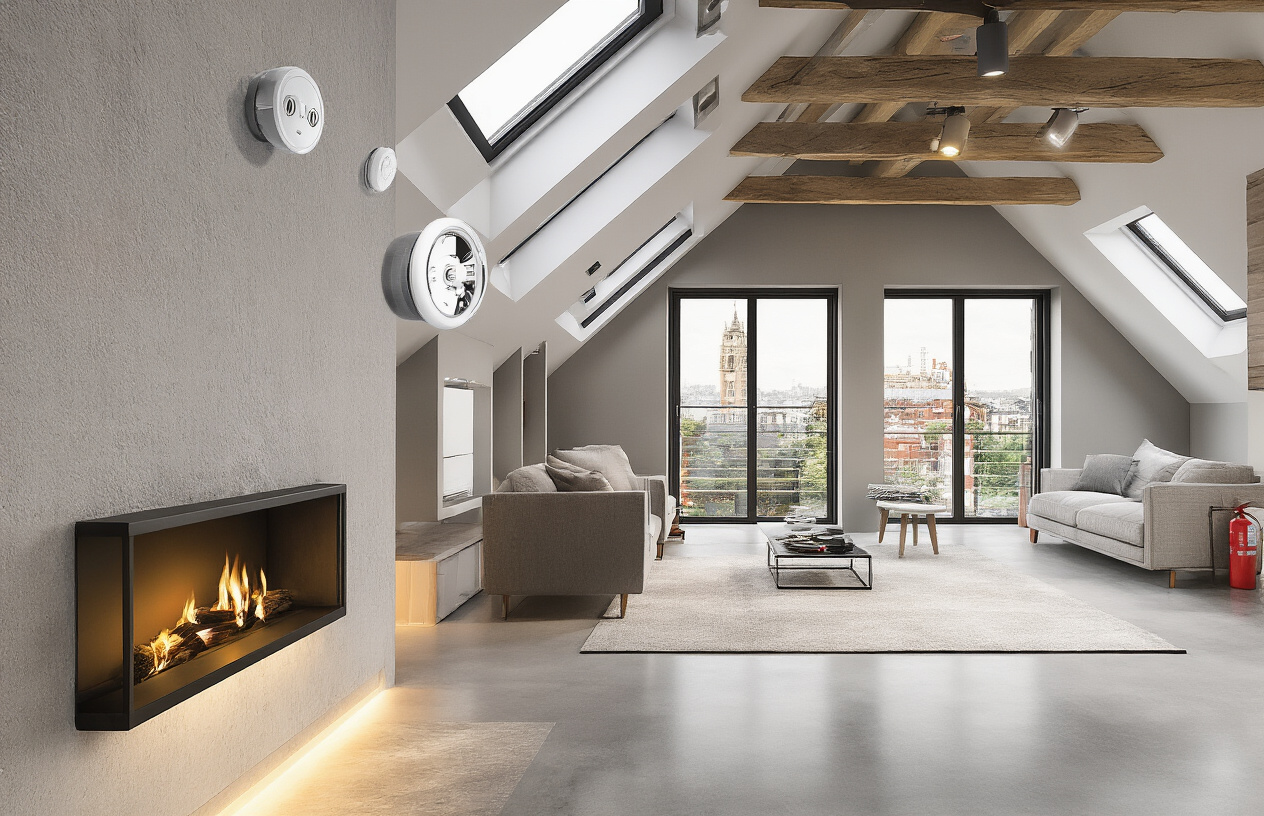
Fire retardant paint options for existing solid doors
Now that we have covered essential fire door requirements, we can explore cost-effective alternatives using intumescent fire retardant paints. These specialized coatings, such as FlameOFF® Fire Barrier Paint and Firefree 88®, can transform existing solid doors into fire-rated assemblies when applied to specific dry film thickness requirements. We find these water-based, non-toxic solutions particularly valuable for loft conversion fire safety, as they can achieve ASTM E119 fire endurance ratings of 1-2 hours while remaining GREENGUARD certified for improved indoor air quality.
Stylish fire door designs that enhance home aesthetics
With this in mind, modern fire door solutions no longer compromise aesthetics for safety. We can apply decorative topcoats over intumescent paints for enhanced visual appeal while maintaining fire protection standards. These coatings work effectively on various substrates including wood, gypsum board, and metal surfaces, allowing us to preserve existing architectural features during loft conversions. Our experience shows that these solutions integrate seamlessly with contemporary home designs while meeting building control requirements.
Balancing safety requirements with budget considerations
Previously, homeowners faced significant costs when upgrading to traditional fire doors for loft conversions. We’ve found that intumescent coating alternatives offer substantial savings compared to full door replacement while achieving equivalent fire ratings. These products provide cost-efficient fire protection that meets IBC/NFPA code compliance, with application costs typically representing a fraction of new fire door installation expenses. This approach allows us to prioritize essential safety upgrades while managing overall project budgets effectively.
Common Misconceptions and Expert Guidance

Avoiding outdated information about fire safety requirements
Fire safety regulations evolve regularly, and we often encounter clients relying on outdated guidance that can compromise their loft conversion compliance. NFPA 80 standards are updated every three to five years to enhance fire protection requirements, meaning information from just a few years ago may no longer be sufficient. We’ve seen cases where building owners followed old fire door specifications, only to discover during inspection that severely outdated or non-compliant installations required costly modifications or complete replacement.
When to consult fire door experts vs builders
While builders excel at construction, we recommend consulting fire door specialists for technical compliance matters. Our experience shows that fire door inspections require specific expertise – technicians trained to factory specifications with decades of experience understand NFPA 80 regulations inside and out. General builders may install doors correctly, but fire safety compliance involves intricate details like temperature-triggered sealing mechanisms, backup battery systems, and precise gap measurements that specialist inspectors are uniquely qualified to assess and maintain.
Understanding local authority variations in requirements
Local fire authorities can have varying interpretations of fire safety standards, particularly regarding loft conversion requirements. We’ve observed that fire marshals and local fire inspectors have discretionary authority to revoke certificates of occupancy if installations don’t meet their specific compliance expectations. Regular professional inspections help navigate these local variations, as experienced fire door specialists understand regional enforcement patterns and can ensure our loft conversion installations meet both national standards and local authority expectations for ongoing compliance.
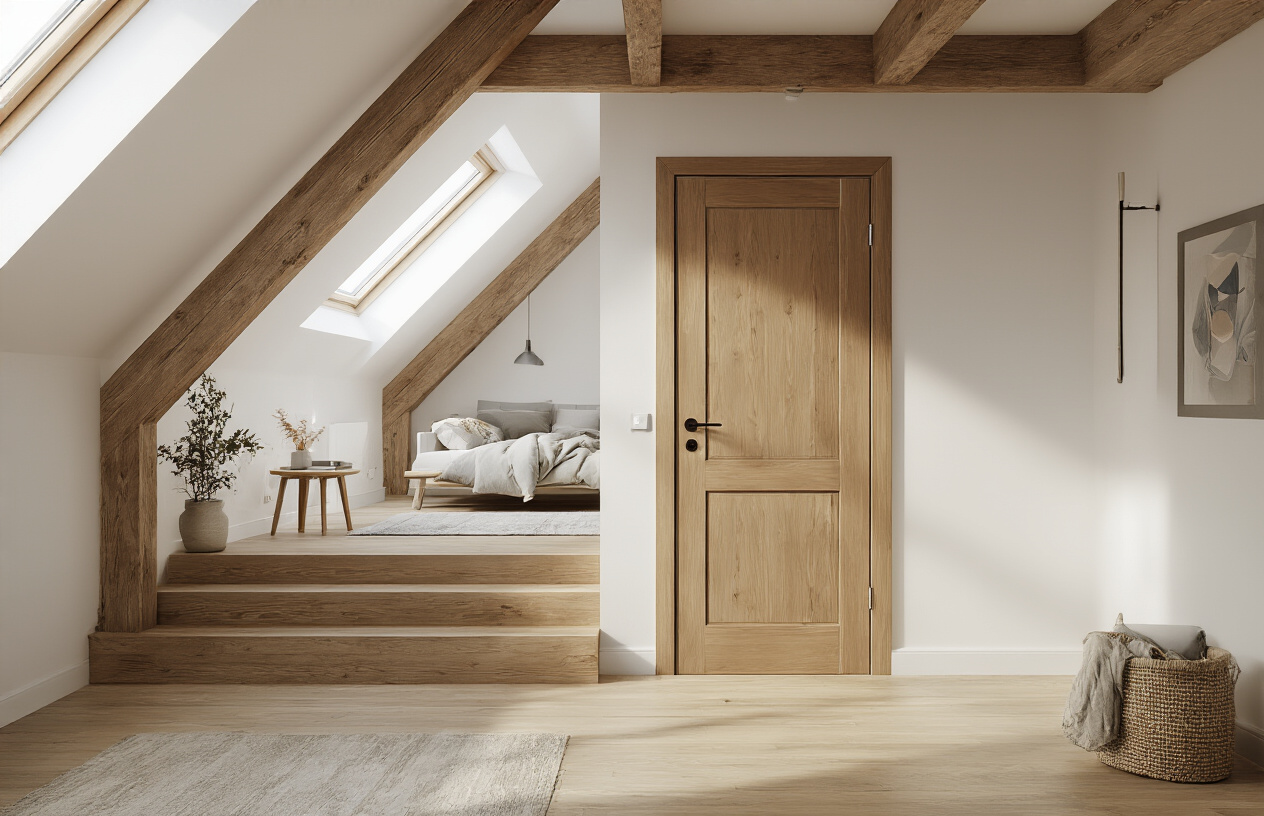
Fire safety compliance in loft conversions requires careful planning and adherence to building regulations, but it doesn’t have to compromise on aesthetics or functionality. We’ve explored how modern fire doors have evolved far beyond their traditionally unattractive predecessors, offering homeowners elegant solutions that protect lives while enhancing home design. From understanding FD20 and FD30 ratings to navigating building control approval processes, the key lies in early consultation with building control authorities who will ultimately sign off on our fire safety measures.
Our investment in proper fire door installation and compliance strategies not only ensures the safety of our families but also protects the value we’re adding through loft conversion. Rather than viewing fire safety requirements as obstacles, we should embrace them as essential components that enable us to create secure, beautiful living spaces. The expertise of qualified professionals, combined with cost-effective alternatives like fire-retardant treatments and modern design solutions, makes achieving both safety and style entirely achievable in our loft conversion projects.