

The Party Wall Act 1996 is a crucial piece of legislation that affects homeowners, developers, and construction professionals across England and Wales. If you’re planning building work near shared boundaries or existing party walls, we’ll help you understand your legal obligations and rights under this Act.
This comprehensive guide is designed for property owners, builders, architects, and surveyors who need to navigate party wall procedures. Whether you’re extending your home, excavating near a neighbor’s foundation, or building on a shared boundary, we’ll break down the complex legal requirements into practical, actionable steps.
We’ll cover the essential classifications that determine when the Act applies, including the different types of party walls and boundary structures covered under sections 1, 2, and 6. You’ll also learn about the mandatory notice requirements and timelines you must follow, plus how the surveyor-led dispute resolution process works when neighbors disagree. Finally, we’ll explain cost allocation rules and your legal rights regarding access and enforcement.
Understanding the Party Wall Act 1996 Coverage and Application

Geographic scope covering England and Wales
The Party Wall Act 1996 provides comprehensive coverage across England and Wales, establishing a unified framework for preventing and resolving disputes related to party walls, party structures, boundary walls and excavations near neighbouring buildings. Anyone intending to carry out notifiable work must give Adjoining Owners proper notice of their intentions, regardless of location within these jurisdictions.
Property ownership structures included under the Act
We find that the Act applies universally to all property ownership structures without discrimination. The legislation extends its reach to Crown, government and local authority owned properties, ensuring no exemptions based on ownership type. Whether dealing with private residential properties, commercial buildings, or public sector developments, the same notice requirements and legal obligations apply equally to all Building Owners undertaking covered works.
Key exclusions: Scotland, Northern Ireland, and planning permissions
While the Party Wall Act 1996 operates throughout England and Wales, we must note its geographical limitations exclude Scotland and Northern Ireland, which maintain separate legislative frameworks. Additionally, the Act specifically addresses party wall matters and excavation rights rather than planning permissions, which fall under distinct regulatory processes. These exclusions create clear boundaries for when alternative legal mechanisms must be pursued for property development disputes.
Types of Work Requiring Party Wall Notices
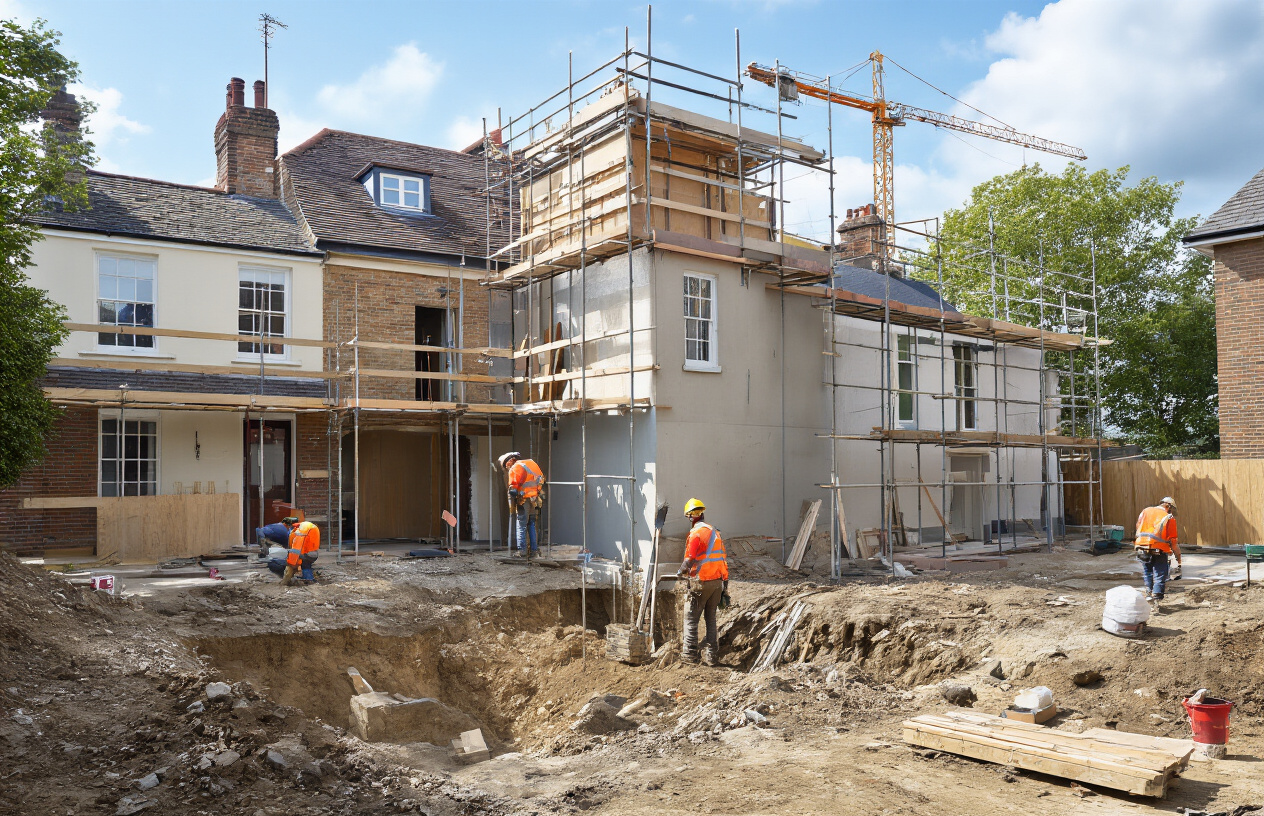
Building new walls on or near property boundaries
When we plan to construct a new wall on or astride the line of junction (boundary), we must serve a Line of Junction Notice under Section 1 of the Party Wall Act 1996. This notice requires a one-month notice period before work begins. We must include our name and address, detailed particulars of the proposed construction work, and the intended start date. The notice must be served in writing to any adjoining owners who have a property interest lasting more than one year.
Modifications to existing party walls and structures
We must serve a Party Structure Notice under Section 3 when proposing to demolish, repair, expose, or otherwise alter existing party walls or shared party structures. This includes cutting into party walls, demolishing and rebuilding walls, altering wall height, removing chimney breasts attached to walls, underpinning walls, or working on party fence walls. Party Structure Notices require a two-month notice period unless the adjoining owner consents to a shorter timeframe.
Excavation work near neighboring buildings
Under Section 6 of the Party Wall Act 1996, we must serve an Excavation Notice when planning to excavate within 3 or 6 metres of a structure on adjoining owners’ land, particularly when digging to a depth lower than the bottom of their foundations. This Notice of Adjacent Excavation protects neighboring properties from potential damage caused by our excavation work and requires a one-month notice period before commencing work.
Construction against existing party walls
When we intend to build new structures that will be constructed against existing party walls, we must serve appropriate notices depending on the specific nature of our work. This may involve serving multiple types of notices, as each distinct type of construction work requires separate notification. We must ensure our planned construction work is properly communicated through the correct Party Wall Act 1996 notice procedures.
Party Wall Classifications and Legal Definitions
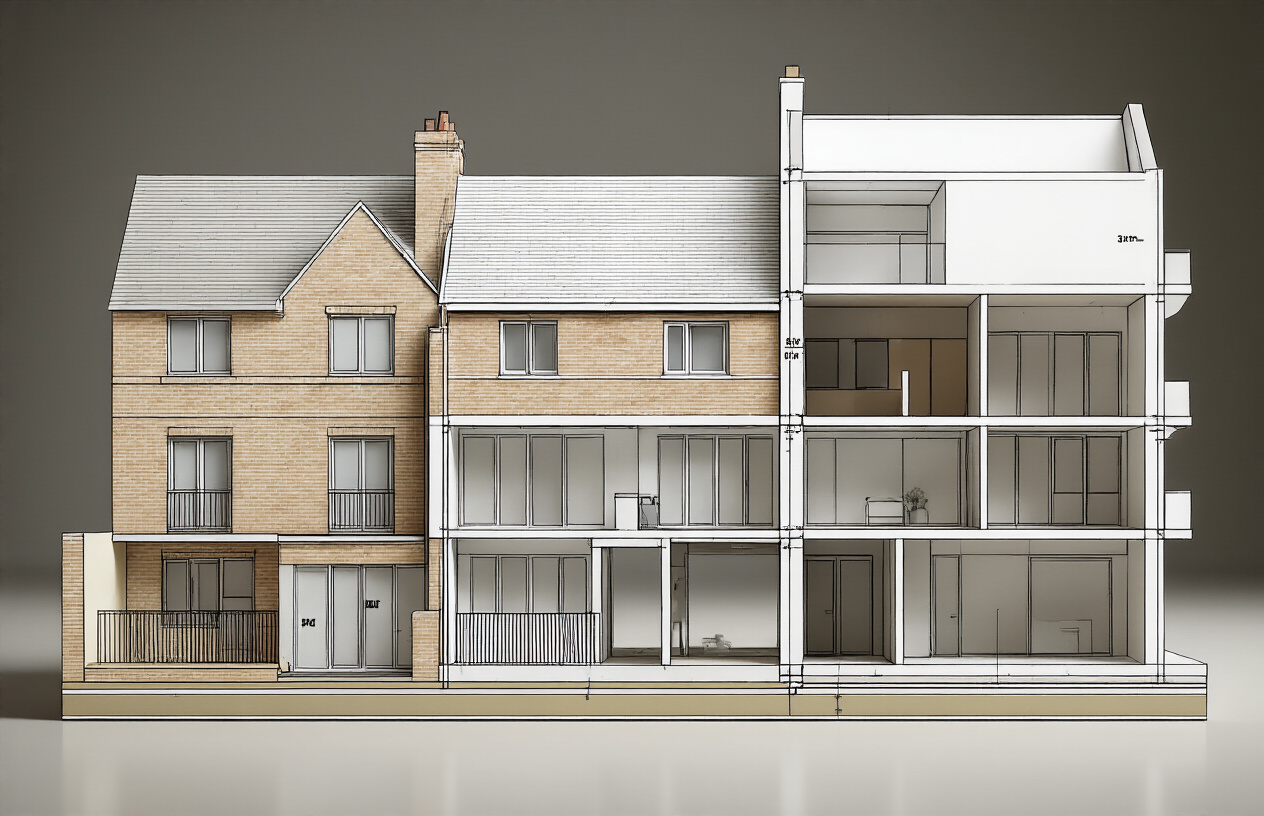
Type A walls: Structures straddling property boundaries
Type A walls represent the most common form of party wall structures under the Party Wall Act 1996. These walls are positioned directly on the boundary line between two neighboring properties, with portions extending onto both sides of the property line. We find that each property owner holds ownership rights to the section of the wall that sits on their respective land, while simultaneously maintaining legal rights to use the portion located on their neighbor’s property for structural support and maintenance purposes.
Type B walls: Walls on one property used by adjacent buildings
Type B walls differ significantly from Type A structures, as they are entirely situated on one owner’s property yet provide structural support to an adjacent building. We observe that while the wall owner retains full ownership of the structure, the neighboring property owner possesses specific usage rights for structural support purposes. This arrangement creates a mutual easement relationship where both parties share maintenance responsibilities and costs, despite the asymmetrical ownership structure.
Party structures and boundary wall distinctions
We must clearly distinguish between party structures and simple boundary walls to ensure proper application of the Party Wall Act 1996. Party structures require mutual use and shared responsibilities between both property owners for construction or maintenance purposes, creating legally binding obligations for both parties. Boundary walls, conversely, may simply mark property divisions without necessarily involving shared usage rights or maintenance obligations. Our understanding shows that party wall agreements establish formal frameworks governing these shared responsibilities, while boundary walls often remain under exclusive ownership and control of a single property owner.
Notice Requirements and Legal Obligations

Two-month notice period for existing structure work
Under the Party Wall Act 1996 Section 2, we must serve notice at least two months before commencing any work on existing party walls or structures. This extended notice period allows adjoining owners sufficient time to inspect our proposed works, seek professional advice, and provide their formal response. We cannot begin construction until this mandatory waiting period expires.
One-month notice period for boundary walls and excavations
For Section 1 works involving new boundary walls and Section 6 excavation works, we must provide one-month advance notice to all affected neighbours. After serving notice under these sections, we must wait an additional 14 days for written responses from each adjoining owner before proceeding with our project timeline.
Essential information to include in notices
Our party wall notices must contain specific mandatory elements to ensure validity. We must include our name and address as building owners, the property address where works are proposed, and a detailed description of planned construction activities. We must also specify the proposed start date with correct notice periods referenced and explicitly state that notice is served under the Party Wall Act 1996. For Section 6 excavation notices, we must include site plans showing adjacent properties and foundation details, plus confirmation of any proposed underpinning works.
Approved methods for serving notices to neighbors
We can serve notices through several approved methods while maintaining proper documentation. We may deliver notices by hand with signed proof of delivery, send them via recorded post or courier with postal receipts, or use email only if recipients have explicitly agreed to electronic service in advance. We must always retain evidence of service to avoid future disputes and ensure our notices reach all adjoining owners, including freeholders, leaseholders with terms over 12 months, and anyone with legal interests in neighbouring properties.
Dispute Resolution Through the Surveyor Process

Appointing Agreed Surveyors or Individual Surveyors
When disputes arise under the Party Wall Act 1996, we can resolve them through the formal surveyor process. We have the option to appoint either a single agreed surveyor that both parties accept, or each party can select their own individual surveyor to represent their interests. These independent surveyors act as impartial experts in resolving party wall disputes, ensuring that all proposed works comply with relevant laws and do not unfairly affect either party.
Creating Legally Binding Awards for Work Specifications
Our appointed surveyors have the authority to create legally binding party wall awards that specify the exact terms and conditions for the proposed works. These awards detail work schedules, construction standards, safety requirements, and payment arrangements that both parties must follow. Once we receive these awards, they become enforceable legal documents that govern how the party wall works must be carried out.
Third Surveyor Appointment for Unresolved Disputes
If our individual surveyors cannot reach agreement on the terms of the award, we can appoint a third surveyor to act as an arbitrator. This third surveyor reviews the dispute impartially and makes binding decisions that resolve disagreements between the appointed surveyors. We rely on this mechanism to ensure that party wall disputes reach resolution even when initial negotiations fail.
14-Day Court Challenge Window for Awards
We have a limited 14-day window from receiving a party wall award to challenge its terms through the courts. During this period, we can seek legal recourse if we believe the award is unfair or incorrectly applied. After this 14-day period expires, the award becomes final and enforceable, meaning we must comply with its terms or face potential legal penalties and enforcement actions.
Cost Allocation and Financial Responsibilities

Building Owner’s Typical Liability for Surveyor Costs
Under the Party Wall Act 1996, we establish that the building owner bears comprehensive financial responsibility for all reasonable costs associated with party wall procedures. Section 11(1) explicitly states that “expenses of work under this Act shall be defrayed by the building owner,” making us responsible for our own surveyor’s fees, the adjoining owner’s surveyor’s fees, agreed surveyor fees when applicable, notice preparation costs, schedule of condition expenses, and any remedial works required due to damage we cause during construction.
Exceptions for Defect-Related Repairs
We recognize specific scenarios where cost allocation may deviate from standard provisions. When party wall structures are built, repaired, or altered in ways that benefit both parties, Section 11(5) provides mechanisms for shared contributions based on mutual benefit derived. Additionally, if we undertake works addressing pre-existing defects that benefit neighboring properties, expenses may be apportioned accordingly, with appointed surveyors having authority to determine appropriate cost allocation in their legally binding awards.
Security Requirements and Compensation Mechanisms
We must prepare for potential financial obligations beyond standard surveyor fees. Our responsibilities include covering reasonable compensation for temporary inconvenience to neighbors, providing security deposits when required by surveyors for high-risk excavation projects, and maintaining adequate insurance coverage since standard building policies may exclude party wall matters. We’re also liable for temporary accommodation costs if our construction causes severe damage requiring neighbors to relocate during repairs.
Protective Measures Funding Obligations
We bear responsibility for funding all protective measures deemed necessary by appointed surveyors. This includes comprehensive photographic schedules of condition documenting pre-existing defects in neighboring properties, ongoing monitoring visits during construction phases, structural assessments and expert consultations when excavation affects neighboring foundations, and final inspections comparing post-construction conditions against original documentation. These protective measures, while adding to our costs, ultimately protect us from unfounded damage claims and ensure compliance with our legal obligations under the Act.
Legal Rights and Access Requirements

Mandatory Access Provisions for Workers and Surveyors
Under Section 8 of the Party Wall Act 1996, we have the right to access neighbouring property to undertake works covered by the Act. This includes construction workers and surveyors who need access to build new boundary walls, raise or rebuild party walls, examine wall structures, or facilitate excavation works including placement of scaffolding when necessary.
14-Day Notice Requirements for Property Access
We must provide 14 days’ prior notice before exercising our right of access, except in emergency situations. The extent and duration of access must either be agreed with the neighbour or determined by a Party Wall Award, which specifies dates, duration and protective measures during usual working hours.
Legal Consequences for Obstructing Access
It is an offence for neighbours to obstruct permitted access under the Party Wall Act 1996. We have legal provisions allowing access to be forced in the presence of a police officer when obstruction occurs, ensuring our statutory rights are protected during necessary construction works.
Property Condition Recording for Damage Attribution
We must compensate neighbours for any loss during access, including loss of use of gardens or inconvenience caused. Property conditions should be recorded before works commence to properly attribute any damage and ensure fair compensation for our use of neighbouring land during construction activities.
Enforcement and Legal Remedies

Court Injunction Options for Notice Violations
When neighbours commence qualifying work without serving proper Party Wall Act notices, we can apply for an interim court injunction to halt the work immediately. We must act quickly, as there are no penalties for failing to serve party wall notices under the Act itself. The court injunction represents our primary enforcement tool to stop unauthorized work that violates the Act’s notification requirements.
Common Law Damages for Non-Act Covered Work
Beyond the Act’s provisions, we retain common law rights to claim damages when neighbours breach their duty of care during qualifying work. Even when work is completed without proper notices, we can pursue compensation through the courts for any resulting property damage. The Court of Appeal has strengthened our position by reversing the burden of proof, requiring errant neighbours to disprove causation rather than requiring us to prove their work caused damage.
Limited Enforcement Procedures Within the Act
We should note that the Party Wall Act 1996 contains remarkably limited enforcement mechanisms. The Act provides no specific penalties for non-compliance with notice requirements, leaving us to rely primarily on court proceedings for remedies. While qualifying work cannot be notified retrospectively under the Act, we can negotiate agreements with neighbours to treat unlawful work contractually, providing some protection for outstanding work phases.
Professional Legal Advice Recommendations for Disputes
Given the complexity of enforcement options and the potential for expensive, protracted disputes, we strongly recommend seeking professional legal advice when neighbours ignore the Party Wall Act. Property solicitors can send formal letters before action, guide us through injunction procedures, and help us understand our rights regarding damages claims. Early professional intervention often prevents minor violations from escalating into costly legal battles that must be disclosed to future property purchasers.
The Party Wall Act 1996 provides a comprehensive framework for managing construction projects that affect shared boundaries and structures throughout England and Wales. We’ve explored how the Act covers everything from building new boundary walls to excavating near neighbouring properties, with specific notice requirements ranging from one to two months depending on the type of work. Understanding the classifications of party walls, the surveyor appointment process, and our legal obligations ensures we can navigate potential disputes professionally and avoid costly legal complications.
Compliance with the Party Wall Act is not optional – it’s a legal requirement that operates independently of planning permission and building regulations. Whether we’re the Building Owner initiating work or the Adjoining Owner receiving notice, we must respect the established procedures for notices, dispute resolution, and cost allocation. Given the complexity of the Act and the binding nature of surveyor awards, we strongly recommend seeking professional legal advice for any party wall matters to protect our interests and maintain positive relationships with our neighbours while achieving our construction goals.
What is the Party Wall Act 1996 and when does it apply?
The Party Wall Act 1996 is a UK law that prevents and resolves disputes between neighbours regarding shared boundaries. It applies if you are building a new wall on a boundary, cutting into an existing party wall, or excavating within 3 to 6 metres of a neighbour’s structure. You must serve a formal Party Wall Notice 1 to 2 months before work begins.